1. Introduction
In the field of broadcast transmitter testing, high-precision, multi-functional test instruments are the core foundation for ensuring signal quality and equipment stability. For a long time, ETL has held a certain market share in FM transmitter testing scenarios due to its early technological accumulation, becoming a choice for some broadcasting enterprises. However, as the broadcast industry evolves toward multi-standard compatibility, intelligent operations and maintenance, and lightweight testing, ETL's limitations in scenario coverage and other aspects have become increasingly prominent, making it difficult to meet the multi-dimensional requirements of modern broadcast testing.
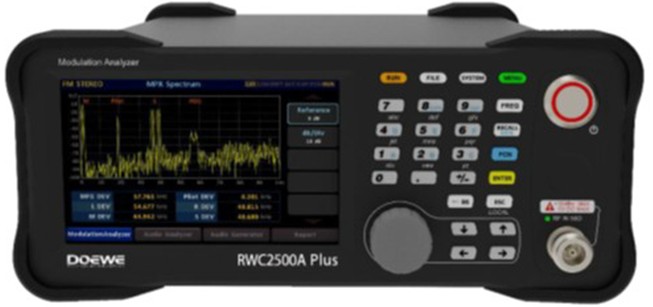
Against this backdrop, the RWC2500A Plus Broadcast Modulation Analyzer has been introduced. Centered on the design philosophy of "multi-standard coverage, high-precision measurement, and convenient operation," it achieves functional expansion in AM/FM dual-mode testing, portability, and localized services—addressing the needs of traditional test equipment in scenarios such as AM/FM broadcast testing and flexible field maintenance. As a professional test instrument tailored for the broadcast industry, the RWC2500A Plus can adapt to multi-scenario requirements ranging from laboratory equipment acceptance and daily operation calibration to outdoor field testing, providing broadcasting enterprises with efficient, accurate, and stable test solutions, and becoming a new choice driving the upgrade of the broadcast testing industry.
2. ETL: The Functional Boundaries and Era Limitations of a Traditional Tool
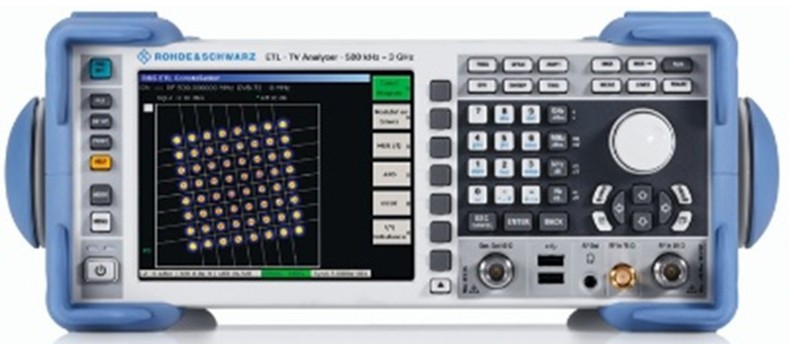
ETL once built a strong reputation in the FM transmitter testing field with its outstanding performance, with its spectrum analysis and digital test functions widely recognized. However, this classic device is now discontinued and has gradually revealed some limitations in the face of evolving broadcast testing demands: lack of AM demodulation, complex audio interface configuration, inability to observe modulation in real-time, closed drive-testing software language and system, 9kg weight affecting portability, and insufficient localized service support—all of which pose challenges when addressing multi-standard, high-efficiency modern broadcast network maintenance
3. RWC2500A Plus: A Technical Solution for Multi-Standard Testing
In response to ETL's multiple limitations in standard coverage, automation, and localized services, the RWC2500A Plus was architecturally designed from the ground up to systematically solve these industry pain points. It is not simply a superposition of functions but a value reconstruction based on the real workflows of broadcast engineers. Through integrated multi-standard support, intelligent interaction, and localized service backing, it provides a more efficient testing solution.
3.1 Comprehensive Multi-Standard Coverage for Broader Scenario Adaptation
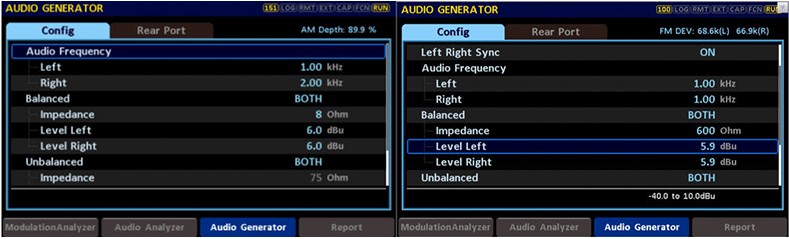
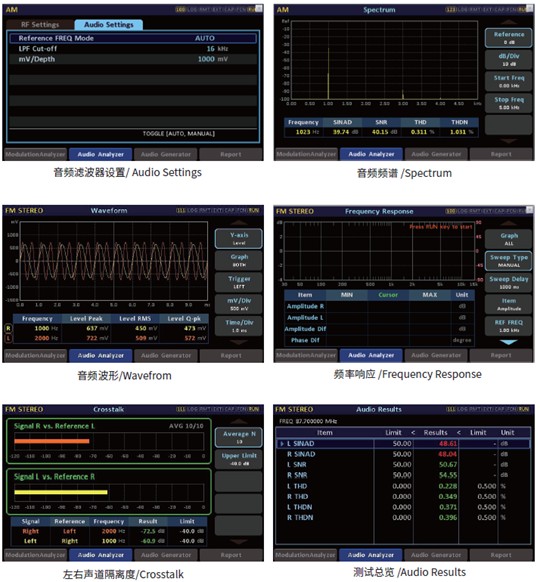
The RWC2500A Plus fully supports multi-standard AM/FM demodulation, covering the AM band from 500 kHz to 30 MHz and the FM band from 76 MHz to 108 MHz—enabling single-unit response to multi-scenario testing needs with RF measurement accuracy of ±0.5 dB. Its core breakthrough lies in integrated audio testing capabilities: a built-in balanced/unbalanced/digital multi-interface audio generator with reference audio THD (Total Harmonic Distortion) as low as 0.02%, allowing real-time observation of modulation changes while adjusting output levels. Key metrics such as AM positive/negative modulation asymmetry, SNR (Signal-to-Noise Ratio), frequency response, and isolation can all be automatically tested. A future one-click automation feature for transmitter performance testing with corresponding report generation will be released, significantly improving testing efficiency. Weighing only 5 kg with a compact form factor and a 5-inch color touchscreen, the device achieves remarkable improvements in portability and user experience.
3.2 Intelligent Drive Testing and Localized Service Support
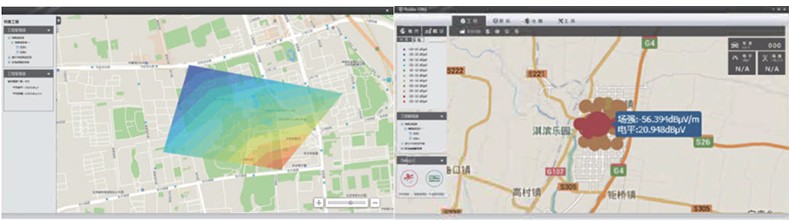
The RWC2500A Plus is equipped with the CMS (Coverage Measurement System), extending single-point testing to network-level optimization. It supports real-time drive testing and map-based data analysis to quickly locate coverage gaps and interference sources. The system provides optional parameter configuration and report display functions, allowing test results to be directly archived. More importantly, it has established a complete localized technical support, calibration, and repair service system—ensuring timely response and significantly reduced maintenance costs. Future support for DRM, CDR, and other digital broadcasting tests is also planned, reserving technical space for the analog-to-digital transition and ensuring long-term equipment investment effectiveness—avoiding ETL's functional gaps in the AM field and limitations in future expansion.
4.RWC2500A Plus: From Replacement to Advancement
Precisely through the aforementioned multi-standard integration, intelligent interaction, and localized service support, the RWC2500A Plus not only compensates for the shortcomings of traditional equipment but also translates technological advantages into industry value, becoming a reliable choice for broadcast testing that faces the future.
4.1 Adapting to Evolving Testing Requirements
Today, with the deep integration of 5G and digital broadcasting technologies, test instruments must possess cross-era and cross-standard adaptability. The RWC2500A Plus builds a future-oriented testing system with AM/FM multi-standard support as its foundation, integrated audio testing as its core, and portability and intelligence as its two wings. It not only solves current testing challenges but also reserves ample space for future technological evolution—avoiding the risk of rapid equipment obsolescence caused by technological iteration.
4.2 Improving Efficiency and Optimizing Costs
In terms of efficiency and cost, the RWC2500A Plus reduces reliance on external equipment through integrated design. The upcoming one-click automated testing will simplify workflows and shorten on-site testing time, while localized services lower maintenance costs and downtime risks. Engineers can focus more efforts on signal optimization and network planning rather than equipment debugging and troubleshooting. This value reshaping is precisely the industry responsibility that a new-generation benchmark product should shoulder—delivering comprehensive benefits that traditional equipment like ETL cannot provide.
5.Conclusion
ETL, as a professional tool for a specific historical period, fulfilled its mission in FM testing. However, issues such as AM absence and poor portability have made it unsuitable for comprehensive modern broadcast network maintenance. The emergence of the RWC2500A Plus is not a simple replacement of tradition but a value reconstruction based on real user pain points. With its multi-standard testing capabilities, highly integrated design, outstanding portability, and localized service support, it has become a reliable choice for broadcast testing.
For broadcast engineers struggling with ETL's functional limitations or seeking more efficient testing solutions, the RWC2500A Plus is undoubtedly a worthwhile option. The popularization of this device will propel the broadcast testing industry into a new era. If you wish to experience the efficiency improvements brought by this innovative tool and learn more product details, please visit Doewe Technology's official website (https://www.doewe.com) or call 010-64327909 for consultation—let the RWC2500A Plus prove its value in your actual work.