1. Introduction
In the performance testing and operational calibration of FM broadcast transmitters, the matching configuration of pre-emphasis and de-emphasis is a critical technical step for ensuring audio transmission fidelity and improving high-frequency signal-to-noise ratio—not an optional procedure. This design originates from the inherent noise characteristics of FM modulation: FM broadcasting relies on carrier frequency variations to carry audio signals, where the noise power spectral density is proportional to the square of the frequency, presenting a significant characteristic of "low noise at low frequencies, high noise at high frequencies."
Meanwhile, natural audio energy distribution exhibits obvious imbalance: core information concentrates in the mid-low frequency bands, while high-frequency components (such as musical overtones and speech sibilance) have relatively weak energy. In the transmission process without compensation measures, high-frequency signals with inherently weak energy are easily masked by superimposed high-frequency noise, causing problems such as loss of high-frequency details and "hissing" interference at the receiving end, severely damaging the layering and clarity of sound quality. If high-frequency signals are simply enhanced by increasing transmission power, bandwidth overflow will occur, interfering with normal broadcasts on adjacent channels and violating spectrum management regulations.
The combined application of pre-emphasis and de-emphasis technology represents a scientific solution that balances signal transmission quality and frequency band resource utilization. It not only specifically addresses the high-frequency noise pain point of FM modulation but is also a core assessment point in industry compliance testing. Professional testing instruments are the core support for ensuring accurate matching of pre-emphasis and de-emphasis parameters and guaranteeing the authenticity and effectiveness of test data. The Doewe Technology RWC2500A Plus Broadcast Modulation Analyzer is a high-performance solution specifically designed for AM/FM transmitter testing.
2. Pre-emphasis and De-emphasis
2.1 Pre-emphasis: High-frequency Signal Compensation Strategy at the Transmitting End
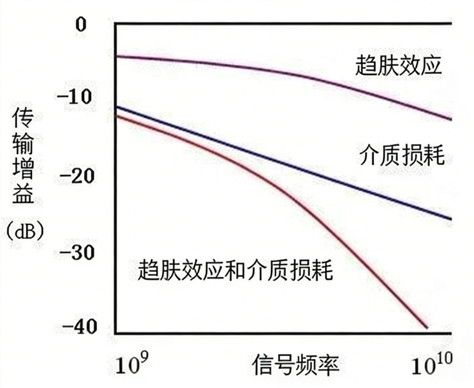
High-frequency signals exhibit significant loss characteristics during transmission: as frequency increases, skin effect and dielectric losses cause rapid energy attenuation (as shown in the figure, when frequency rises from 10⁹Hz to 10^10^Hz, transmission gain drops by approximately 30dB). In natural audio for FM broadcasting, high-frequency components (musical overtones, speech sibilance) inherently have weak energy, and after superimposing transmission losses, they are easily masked by the inherent high-frequency noise of FM modulation.
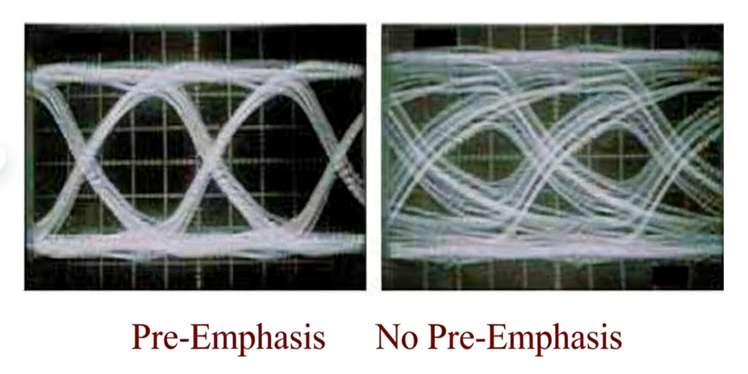
Pre-emphasis is a high-pass filter circuit embedded in the audio processing chain of FM transmitters. Its core function is to "actively amplify" high-frequency signals above 1kHz.
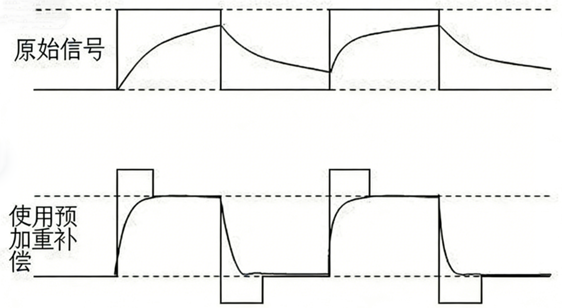
Industry-standard pre-emphasis time constants are 50μs or 75μs, corresponding to fixed amplification slopes (typically 6dB/octave): the higher the frequency, the greater the amplification. For example, when using 75μs pre-emphasis, the amplification of a 10kHz signal is approximately 13~14dB higher than that of a 1kHz signal, achieving precise enhancement of high-frequency signals.
The key values of this design are:
1. Improving High-frequency Signal Anti-interference Capability: By artificially enhancing high-frequency signal energy, it can "combat" high-frequency noise attenuation during transmission, preventing being submerged by noise;
2. Controlling Signal Bandwidth: The amplification slope of pre-emphasis is strictly calibrated, preventing high-frequency signal overload, ensuring FM signal bandwidth is controlled within the industry standard range of 150kHz (i.e., center frequency ±75kHz), avoiding adjacent-channel interference;
3. Matching Receiver Characteristics: Pre-emphasis parameters strictly correspond to de-emphasis circuits in mainstream radios, laying the foundation for subsequent signal restoration.
In FM transmitter measurement, if pre-emphasis settings are skipped, the measured high-frequency signal-to-noise ratio will be far below actual broadcast levels, failing to truly reflect the equipment's transmission performance.
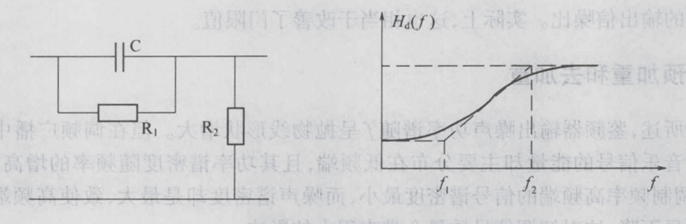
2.2 De-emphasis: Signal Restoration and Noise Suppression at the Receiving End
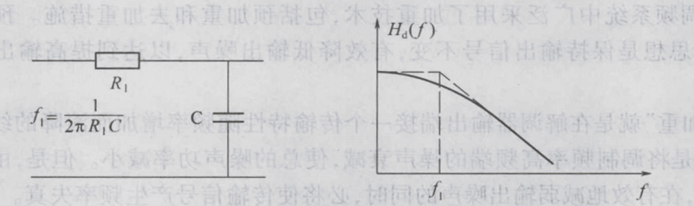
De-emphasis is a low-pass filter circuit completely complementary to pre-emphasis, integrated into receiving devices such as radios, and is also an essential configuration for FM transmitter performance testing.
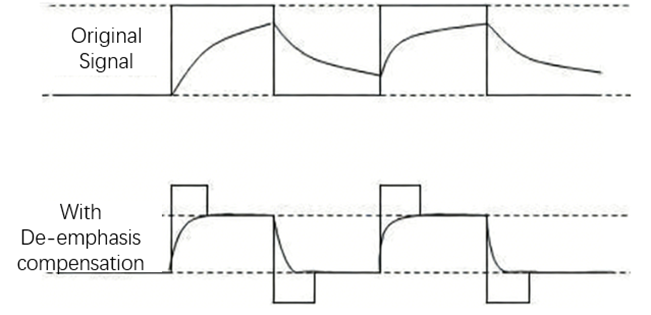
When FM signals that have undergone pre-emphasis are demodulated, the de-emphasis circuit proportionally attenuates high-frequency signals, restoring them to frequency balance characteristics consistent with the original audio.
The core significance of this stage lies in synchronously suppressing high-frequency noise: high-frequency noise superimposed during transmission has not undergone pre-emphasis amplification at the transmitting end, and will be significantly attenuated in the de-emphasis stage, ultimately achieving the dual effect of "high-frequency signal restoration and high-frequency noise suppression," improving the high-frequency signal-to-noise ratio by 10dB~15dB and significantly improving sound quality.
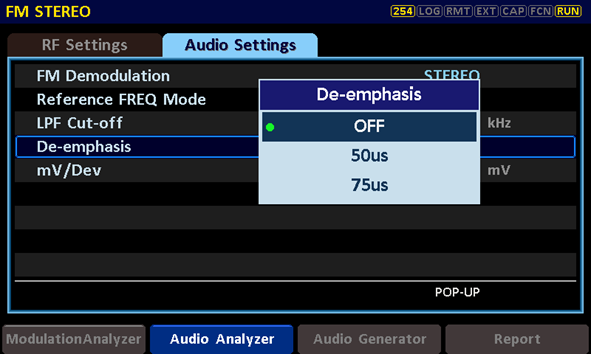
As a professional broadcast modulation analyzer, the RWC2500A Plus offers selectable de-emphasis parameters of 50μs/75μs in FM mode. When measuring FM transmitters, you can select the corresponding de-emphasis setting to match the transmitter's pre-emphasis parameters (50μs/75μs), ensuring the reliability of test results. If de-emphasis parameters do not match, it will directly affect the test results and actual broadcast performance: when de-emphasis is not activated, received signals will have excessive high-frequency levels, resulting in harsh distortion; when parameters are mismatched, high-frequency signals will be excessively attenuated, causing muffled sound and loss of detail, rendering measurement results worthless.
2.3 Technical Coordination and Measurement Significance
Pre-emphasis and de-emphasis constitute coordinated key components in the FM broadcast system. The former actively enhances high-frequency energy at the transmitting end to combat channel noise, while the latter correspondingly restores frequency response and synchronously suppresses noise at the receiving end. Their cooperation can achieve significant improvements of 10-15dB in high-frequency signal-to-noise ratio. This complementary design enables FM broadcasting to transmit high-fidelity audio within limited bandwidth without substantially increasing transmission power, representing one of the optimal solutions for balancing sound quality, coverage, and spectral efficiency.
Therefore, whether parameters are strictly matched in measurement largely affects whether test data can reflect actual broadcast performance: parameter deviations may weaken the noise equilibrium mechanism of the transceiver link, causing frequency response distortion and indicator misjudgment. This makes pre-emphasis/de-emphasis not merely technical options, but core link parameters that FM transmitters should prioritize verifying. Their measurement accuracy is an important basis for evaluating equipment compliance and broadcast quality.
3. RWC2500A Plus: High-Performance Solution for FM Transmitter Testing
In addition to meeting pre-emphasis and de-emphasis testing requirements, the RWC2500A Plus offers the following core advantages, comprehensively covering multi-scenario needs for FM transmitter testing:
- Multi-dimensional Testing Capability: A single unit can achieve comprehensive testing of RF parameters, modulation performance, and audio aspects. It supports high-precision AM/FM demodulation (including stereo), and can measure core parameters such as carrier power, frequency deviation, FM deviation, and pilot signals, as well as key indicators such as audio signal-to-noise ratio, distortion, and separation. No matching with multiple devices is required, significantly improving testing efficiency.
- Convenient Operation and Data Management: Equipped with a 5-inch color touchscreen and collaborative button operation with an intuitive and easy-to-understand interface; supports custom upper and lower limits for test items, with real-time alerts for out-of-limit indicators for quick anomaly detection; test results can be exported with one click, supporting generation of Word format reports to meet data archiving and reporting needs.
- Flexible Expansion and Remote Control: Provides rich optional configurations, including RDS analysis options, road testing software options (BroadCMS Plus), etc., allowing flexible function expansion according to actual needs; supports PC remote control via LAN port, with open control command interfaces for convenient automation system integration, adapting to various scenarios such as laboratory fixed testing and outdoor mobile testing.
4.Conclusion
Pre-emphasis and de-emphasis are indispensable complementary links in the "transmission-transmission-reception" chain of FM broadcast systems. Their core significance lies in specifically addressing the high-frequency noise pain point of FM modulation, achieving dual optimization of sound quality and frequency band utilization. In FM transmitter measurement work, strictly matching pre-emphasis and de-emphasis parameters is a prerequisite for ensuring accurate test data, while selecting a professional and reliable testing instrument is the key to achieving this goal.
The Doewe Technology RWC2500A Plus Broadcast Modulation Analyzer provides an authoritative solution for pre-emphasis and de-emphasis testing with precise parameter matching, comprehensive testing functions, and convenient operation experience. It not only ensures the compliance and accuracy of testing work but also helps users improve equipment operation and maintenance efficiency and guarantee broadcast signal transmission quality. Relying on Doewe Technology's technical strength and service network, the RWC2500A Plus will become your reliable partner in the field of FM transmitter testing, jointly promoting the high-quality development of broadcast technology.For more product details, please visit: https://www.doewe.com , Inquiry Phone: 010-64327909, Email: info@doewe.com .